
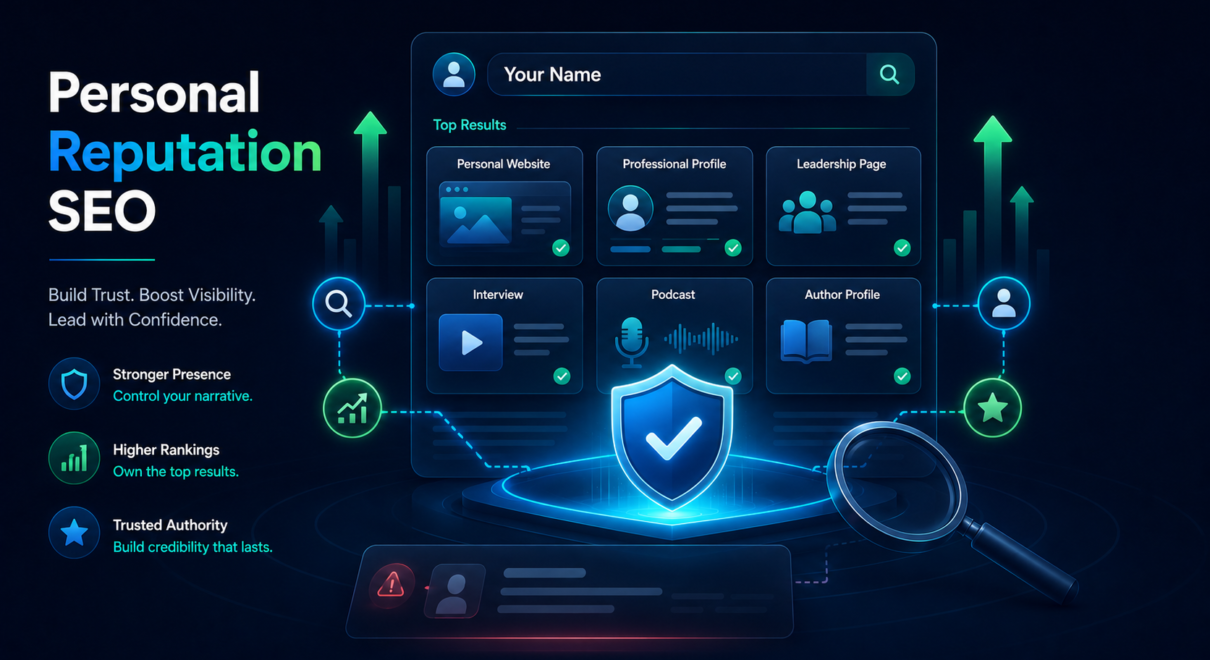
SEO reputation management for businesses helps improve what appears when people search a company name, brand name, founder name, product name, or related branded terms in Google.
For many businesses, the first page of search results acts like a public reputation report. Potential customers, partners, investors, employees, vendors, and journalists may search the company before making a decision. If the results show the official website, trusted profiles, company information, interviews, case studies, and positive third-party mentions, the search experience supports trust.
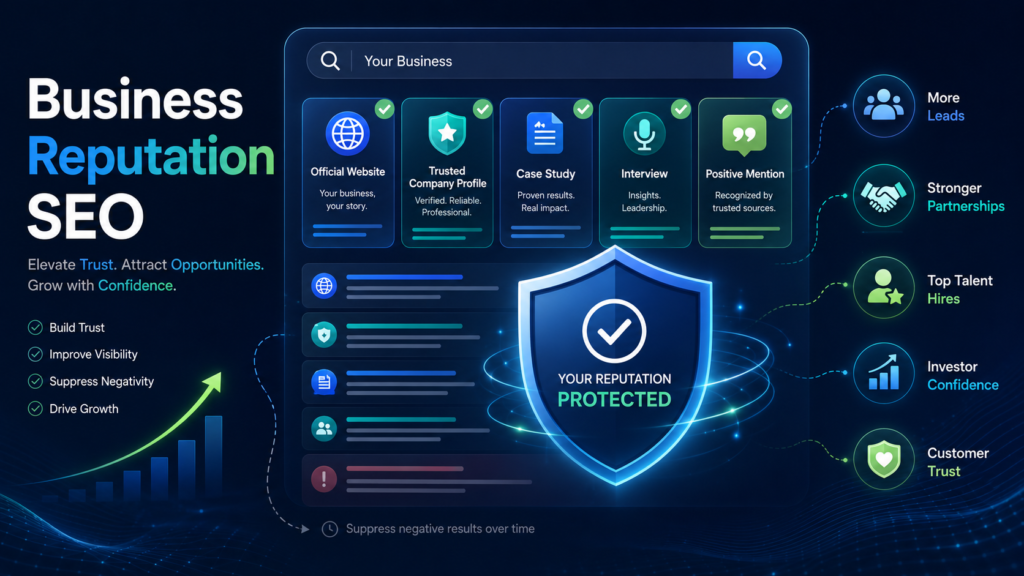
But if page one includes negative articles, complaint pages, forum threads, outdated media, legal mentions, or other damaging results, the search experience can create doubt before the business has a chance to explain itself.
That is where SEO reputation management for businesses becomes useful.
The goal is not to remove every negative result or manage customer reviews. The goal is to improve branded search results by creating, optimizing, and promoting stronger positive or neutral assets that can rank above negative content over time.
Why Business Search Results Matter
People often search a business before contacting it.
This may happen before:
- requesting a quote
- booking a consultation
- signing a contract
- placing an order
- applying for a job
- investing in a company
- approving a partnership
- working with a vendor
- contacting a founder or executive
- trusting a professional service provider
Even when a business has a strong website, a negative result on page one can reduce confidence.
A customer may not know whether the negative result is accurate, outdated, exaggerated, or incomplete. They may simply see the headline, forum title, complaint page, or article snippet and hesitate.
This is why business reputation SEO is not only about rankings. It is about how search results affect trust and conversion.
If branded search results create concern, the business may lose opportunities before a lead ever reaches the contact form.
What Is SEO Reputation Management for Businesses?
SEO reputation management for businesses is the process of improving branded search results by promoting positive, neutral, and brand-controlled content.
This may include:
- optimizing the official website
- strengthening the About page
- improving company profiles
- publishing positive third-party articles
- creating founder or leadership content
- building branded blog content
- developing case studies
- promoting interviews
- publishing PR-style content
- strengthening business listings
- building links to positive assets
- monitoring branded search results
If negative content ranks for the business name, the strategy may focus on suppression.
Suppression means helping stronger positive or neutral results rank above negative pages so the negative content becomes less visible.
This is different from removal. Removal means the content is deleted or deindexed. Suppression means the content still exists, but it is pushed lower by better-ranking assets.
For many businesses, suppression is more realistic than removal.
Common Negative Search Results Businesses Face
Businesses may need reputation management SEO services for many different reasons.
Common negative or problematic results include:
- old negative news articles
- complaint pages
- forum threads
- negative blog posts
- outdated company information
- legal mentions
- business dispute pages
- negative review pages ranking organically
- competitor comparison pages
- misleading third-party profiles
- old employee-related mentions
- outdated founder or leadership content
- social media posts ranking in Google
- public database pages
- negative branded search suggestions
Not every problematic result is directly negative.
Sometimes the issue is that branded search results are incomplete, outdated, or controlled mostly by third-party sites. A business may have weak owned assets, few positive mentions, and no strong content competing with a negative result.
In that situation, even one unfavorable page can dominate the search experience.
Start With a Business SERP Audit
A business SERP audit is the first step in any reputation management campaign.
SERP means search engine results page. The audit reviews what appears when someone searches the company name, brand name, product name, founder name, executive names, and related branded terms.
Searches may include:
- company name
- company name plus location
- company name plus reviews
- company name plus complaints
- company name plus scam or legit if relevant
- company name plus lawsuit if relevant
- founder name plus company
- executive name plus company
- product or service brand names
- old brand names or previous company names
Each result should be classified as:
- positive
- neutral
- negative
- owned
- semi-controlled
- third-party
- outdated
- high-risk
- low-risk
- easy to improve
- difficult to suppress
The audit should also identify which positive assets already exist and which ones are missing.
For example, the business may have a strong homepage but a weak About page. It may have a LinkedIn company page that ranks but is incomplete. It may have a positive article on page two that could be strengthened. It may have no case studies, founder content, or third-party profiles.
A proper audit turns the problem from “our reputation looks bad” into a clear search visibility roadmap.
Strengthen the Official Website First
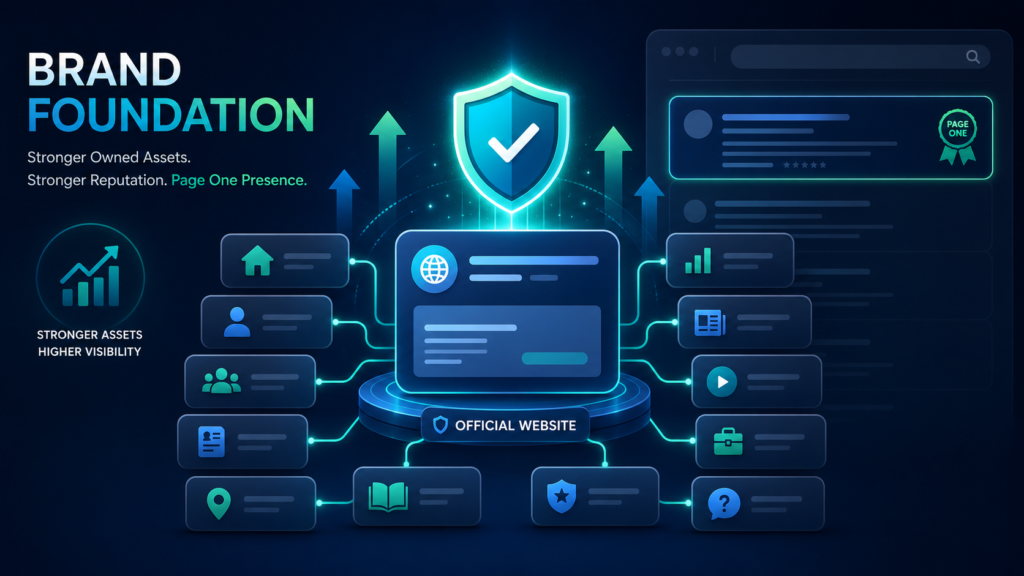
The official website is usually the most important brand-controlled asset.
For many business name searches, the homepage should rank first. But the homepage alone is not enough. A business should also strengthen other owned pages that can support trust and branded visibility.
Useful owned assets may include:
- homepage
- About page
- leadership page
- founder page
- case studies
- press page
- media page
- company news page
- service pages
- location pages
- resource pages
- brand story page
- FAQ page
The website should clearly explain:
- what the business does
- who it serves
- where it operates
- who leads the company
- why the company is credible
- what proof supports its claims
- how customers or partners can contact it
- what current information should define the brand
If the website is thin, outdated, poorly structured, or missing important trust pages, it becomes harder for Google to rank owned assets strongly.
For business reputation SEO, the official website should be the foundation.
Improve the About Page and Leadership Pages
The About page is one of the most important pages for branded reputation.
When people search a company, they often want to understand who is behind it, how long it has existed, what it does, and whether it can be trusted.
A strong About page may include:
- company background
- mission or values
- leadership information
- founder story
- industries served
- company milestones
- client types
- service areas
- media mentions
- professional memberships
- links to profiles or case studies
Leadership pages can also help.
For companies where founders or executives are searched, leadership pages can create strong owned assets for personal-name and company-name queries.
A leadership page may include:
- executive bio
- current role
- professional background
- company involvement
- expertise areas
- interviews or media links
- speaking or publication references
- links to LinkedIn or external profiles
These pages help connect the company to real people and strengthen entity clarity around the brand.
Build Positive Third-Party Assets
Owned content is important, but a strong branded search page usually includes third-party assets too.
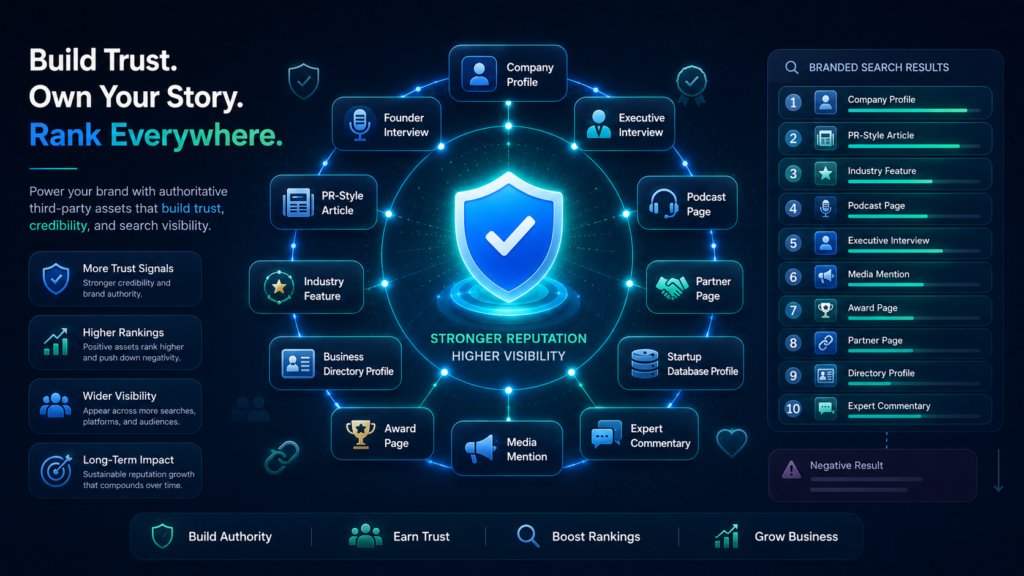
Third-party content can appear more independent and may rank well if published on a credible website.
Useful third-party assets may include:
- guest posts
- company profiles
- founder interviews
- executive interviews
- PR-style articles
- podcast pages
- industry features
- partner pages
- business directory profiles
- startup database profiles
- award pages
- media mentions
- association profiles
- expert commentary
For businesses with negative search results, third-party assets can help occupy more space on page one.
A company profile on a credible business platform, an interview with the founder, a guest article from a company leader, or an industry mention can all become useful positive or neutral search assets.
The key is quality.
Weak third-party content on low-quality sites may not rank. Stronger content on relevant, indexable, and authoritative platforms has a better chance of helping suppression.
Use Case Studies and Trust-Building Content
Case studies can help businesses show credibility.
They may not always rank directly for the company name, but they strengthen the official website and support trust signals.
Case studies may include:
- client results
- project examples
- business outcomes
- before-and-after improvements
- service success stories
- industry-specific examples
- customer challenges solved
- measurable improvements where available
For businesses with reputation challenges, case studies help provide a more complete picture. They show that the company is active, useful, and capable of delivering real value.
Other trust-building content may include:
- testimonials page
- media page
- company milestones
- service process pages
- team pages
- FAQ pages
- industry guides
- community involvement content
- partner mentions
The goal is not to create empty promotional content. The goal is to create useful proof points that support credibility.
Create Branded Blog Content Carefully
Branded blog content can support reputation management when it is planned strategically.
This may include articles about:
- company expertise
- industry trends
- service education
- founder insights
- customer questions
- business updates
- case-based explanations
- company values
- local involvement
- product or service improvements
Branded blog content should not look like reputation repair filler. It should provide real value and support the company’s current identity.
For example, a software company may publish technical guides, product education, customer success insights, and leadership commentary. A local service business may publish educational articles, location-based resources, and service guides. A professional services firm may publish thought leadership, case explanations, and industry analysis.
This content can strengthen the website and create internal linking opportunities to key brand-controlled assets.
Publish Founder and Executive Content
For many businesses, the company’s reputation is connected to its leadership.
Founder and executive content can help create stronger branded search results for both the business and the people behind it.
Useful content may include:
- founder interviews
- executive bios
- leadership pages
- podcast appearances
- guest articles
- thought leadership pieces
- business story articles
- media quotes
- speaker profiles
- professional profiles
This is especially useful for:
- startups
- agencies
- consulting firms
- law firms
- medical practices
- finance companies
- real estate companies
- local service businesses
- founder-led brands
- public-facing companies
Leadership content adds depth to the brand. It can also help when people search both the company name and the founder or executive name.
Strengthen Business Profiles and Listings
Business profiles and listings can help create additional neutral or positive search assets.
These may include:
- LinkedIn company page
- Crunchbase
- Google Business Profile
- industry directories
- local business directories
- professional association listings
- partner profiles
- marketplace profiles
- vendor listings
- startup databases
- social profiles
These assets should be accurate, complete, and consistent.
A strong business profile should include:
- correct business name
- website URL
- business description
- logo
- category
- location or service area where relevant
- services or specialties
- social links
- leadership details if appropriate
Business profiles often rank because the platforms themselves have authority. If the profiles are incomplete or inconsistent, they may still rank but fail to support trust.
For reputation management, neutral profiles can still be useful because they occupy space that could otherwise be filled by negative results.
Build Links to Positive Assets
Publishing positive content is not always enough.
If negative search results are strong, positive assets may need authority to outrank them.
Link building can help.
For business reputation SEO, links may be built to:
- official website pages
- About page
- leadership pages
- positive guest posts
- interviews
- company profiles
- PR-style articles
- case studies
- third-party mentions
- business listings
Useful link sources may include:
- partner websites
- guest posts
- business directories
- association pages
- niche publications
- supplier or vendor pages
- local organizations
- media mentions
- internal website links
- social profile links
The goal is not spammy link building. The goal is to support legitimate positive assets with relevant authority signals.
This is often what separates simple content publishing from an actual suppression campaign.
Suppress Negative Search Results with SEO
To suppress negative search results with SEO, a business needs enough positive and neutral assets that can realistically compete.
The strategy may include:
- improving the official website
- optimizing brand-controlled pages
- creating new third-party content
- strengthening company profiles
- publishing founder or executive content
- building links to positive assets
- monitoring ranking movement
- adjusting the campaign over time
Suppression is usually gradual.
A negative result may move from position 4 to position 6, then to position 9, then eventually to page two if enough stronger assets move above it. The timeline depends on the authority of the negative page, the strength of positive assets, the uniqueness of the brand name, and the level of SEO effort behind the campaign.
Suppression does not delete the negative result. It reduces its visibility.
For many businesses, that visibility reduction can make a meaningful difference.
What This Service Is Not
It is important to keep expectations clear.
SEO reputation management for businesses is not the same as review management.
It is not mainly about:
- responding to Google reviews
- requesting customer reviews
- managing Yelp reviews
- removing every complaint
- deleting every negative article
- hiding all criticism
- creating fake positive reviews
- manipulating reputation with low-quality content
Reviews and local reputation may matter in some cases, but the core focus here is branded search suppression.
The goal is to improve what appears in search results when people search the company, brand, founder, or related branded terms.
Ethical SEO reputation management uses legitimate content, optimization, publishing, and authority building to improve the search landscape.
When Businesses Need Reputation Management SEO Services
Reputation management SEO services are useful when branded search results affect business outcomes.
A business may need support when:
- negative content appears on page one
- negative results rank in the top three positions
- leads or sales have declined
- customers mention negative search results
- hiring or recruiting is affected
- investors or partners are concerned
- old articles still dominate branded searches
- complaint pages or forums rank highly
- third-party pages outrank owned assets
- the company lacks positive search assets
- a founder or executive result affects the company
- confidential suppression planning is needed
The more visible and damaging the result is, the more important a structured approach becomes.
A professional campaign should start with an audit, not promises. The first step is understanding what ranks, what can be improved, and which positive assets can realistically compete.
How Long Business Reputation SEO Takes
Timelines vary based on difficulty.
A simple case may show movement within 2-3 months. A difficult case involving high-authority negative content may take longer.
Timeline depends on:
- strength of negative result
- ranking position of negative content
- authority of the negative domain
- number of negative results
- strength of existing positive assets
- quality of new content
- publishing opportunities
- backlink strength
- indexing speed
- branded search competition
- freshness of the search results
If the business already has strong positive assets near page one, suppression may be easier. If the business has limited online presence and the negative result is strong, the campaign may require more content and link building.
The right timeline should be based on the actual search results.
Build a Stronger First Page for Your Brand
For businesses, branded search results can influence decisions before a customer, partner, employee, or investor ever reaches out.
If page one is filled with strong owned assets, credible third-party content, company profiles, case studies, leadership pages, and positive mentions, the search experience supports trust. If negative or outdated results dominate, the business may lose opportunities before the conversation begins.
SEO reputation management for businesses helps improve that search landscape.
The goal is not fake positivity or review manipulation. The goal is to create a stronger, more accurate, and more credible branded search presence through content, optimization, publishing, link building, and monitoring.
If negative search results for a business are affecting trust, leads, hiring, partnerships, or sales, a confidential reputation management SEO services review can help identify what currently ranks, which positive assets can realistically compete, and what suppression strategy makes sense.