


SEO reputation management strategies help improve what people see when they search for a person, company, founder, executive, public figure, or brand online. When negative, outdated, misleading, or incomplete results appear on page one of Google, they can influence trust before a conversation ever starts.
For a business, this may affect leads, sales, partnerships, hiring, investor confidence, or customer perception. For an individual, it may affect professional credibility, job opportunities, client trust, media perception, or personal reputation.
The goal of SEO reputation management is not simply to publish positive content. The goal is to build a stronger branded search landscape where positive, neutral, and brand-controlled assets have a better chance of ranking above negative results.
That usually requires a combination of search result analysis, content strategy, profile optimization, third-party publishing, link building, and monitoring.
This article explains practical reputation management SEO strategies that can help brands and individuals improve search visibility and reduce the prominence of negative results over time.
Start With a Branded Search Audit
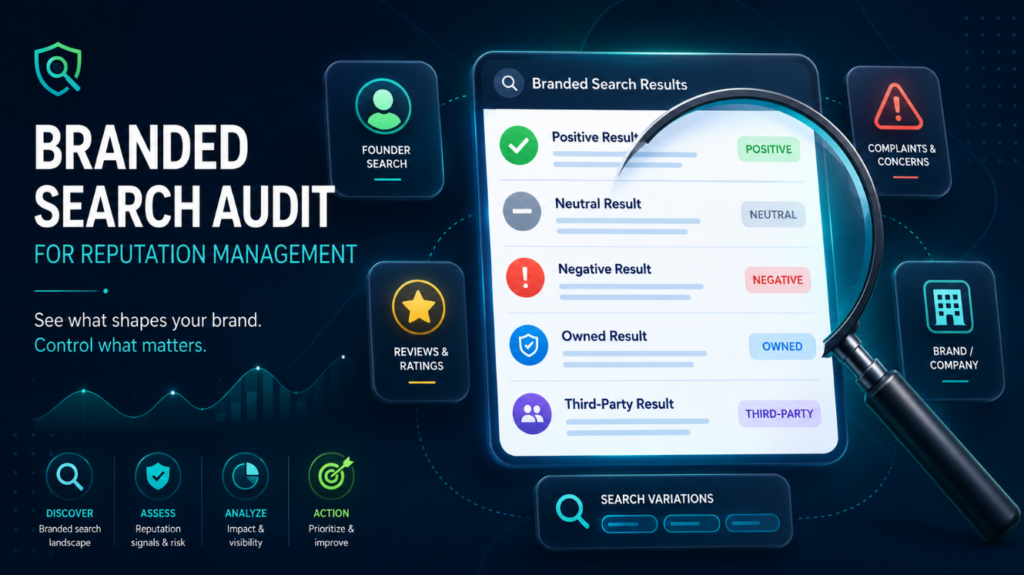
Every effective reputation management SEO strategy should begin with a branded search audit.
Before creating new content or building links, you need to understand what currently appears when someone searches your name, company, brand, product, founder, or executive.
Review the first page of Google for:
- your main name or brand
- common name variations
- company name plus reviews
- company name plus complaints
- founder or executive name
- brand plus location
- brand plus lawsuit or controversy terms if relevant
- brand plus “scam,” “legit,” or “reviews” if those results appear
The goal is to understand the real search environment.
Classify each result as:
- positive
- neutral
- negative
- owned
- semi-controlled
- third-party
- high risk
- low risk
- easy to improve
- difficult to suppress
This audit gives you the map for the campaign.
A negative article in position 2 is more urgent than a weak result at the bottom of page two. A positive profile already ranking in position 11 may be a strong opportunity. An official About page ranking below third-party content may need better optimization.
Without this first step, reputation management becomes guesswork.
Build a Clear Suppression Strategy
Suppression is one of the central concepts in SEO reputation management.
Suppression means pushing negative search results lower by helping stronger positive or neutral results rank above them. The negative result may still exist, but fewer people see it if it moves lower in the search results.
A good suppression strategy should answer:
- Which negative results need to move down?
- Which positive assets can move up?
- Which assets already exist?
- Which new assets need to be created?
- Which pages need backlinks?
- Which results are realistic to influence?
- What timeline is reasonable?
Not every negative result can be suppressed quickly. A weak complaint page may be easier to move than a major media article. A negative result in position 8 may be easier to push down than one in position 2.
The suppression strategy should be realistic and based on search difficulty, not promises.
For brands and individuals, the most effective approach is usually to build several stronger assets instead of relying on one page or one article.
Strengthen Owned Assets First

Owned assets are the pages you control directly.
For a business, owned assets may include:
- homepage
- About page
- leadership pages
- service pages
- case studies
- press page
- blog articles
- company news pages
- location pages
- resource pages
For an individual, owned assets may include:
- personal website
- biography page
- portfolio page
- speaking page
- media page
- author profile
- professional blog
- project pages
Owned assets should provide clear, accurate, and search-friendly information about the person or brand.
Important improvements may include:
- optimized title tags
- clear H1 headings
- stronger About content
- consistent name or brand usage
- internal links to important pages
- trust signals
- professional bios
- schema markup where relevant
- updated information
- strong page structure
- crawlable and indexable pages
Owned assets are important because they establish the core identity of the person or brand. They help search engines understand who the entity is, what it does, and which pages are most relevant.
If your owned assets are weak, outdated, thin, or poorly optimized, it becomes harder to control branded search results.
Optimize Personal and Company Profiles
Search results for a person or company often include profiles from third-party platforms.
These may include:
- Crunchbase
- business directories
- professional associations
- author bios
- podcast guest pages
- industry profiles
- speaker profiles
- company databases
- social media profiles
- marketplace or partner profiles
These profiles can be useful because many profile platforms have strong domain authority. If optimized properly, they may rank well for branded searches.
For individuals, a strong LinkedIn profile, professional bio, speaker page, podcast profile, or author profile can help occupy branded search space.
For businesses, company profiles, directory listings, partner pages, and industry profiles can help create a more complete branded SERP.
Profile optimization should include:
- consistent name or brand format
- accurate descriptions
- current work or company information
- professional photos or logos where appropriate
- links to official websites
- complete contact or business details
- relevant keywords used naturally
- consistent entity information across platforms
Incomplete profiles rarely perform well. A strong profile should look legitimate to both users and search engines.
Create Positive Third-Party Content
Owned assets are important, but they are usually not enough.
Branded search results often include a mix of owned websites, profiles, articles, media mentions, directories, videos, and third-party pages. To improve the overall search landscape, brands and individuals often need positive or neutral third-party content.
Useful third-party assets may include:
- guest posts
- interviews
- expert commentary
- contributed articles
- press releases
- podcast appearances
- industry features
- professional profiles
- partner features
- biography pages
- media mentions
Third-party content can help because it appears more independent than self-published content. It can also rank well if published on a strong or relevant website.
For a founder or executive, this may include interviews, leadership profiles, expert commentary, and business features.
For a company, this may include guest articles, case study mentions, industry commentary, news updates, or PR-style content.
The goal is to create credible assets that search engines may consider relevant for branded queries.
Publish Content That Matches the Branded Search Intent
Reputation management content should not be random.
If someone searches a company name, Google may prefer company profiles, About pages, reviews, social profiles, directories, and branded articles. If someone searches a founder name, Google may prefer bios, LinkedIn, interviews, speaker pages, podcasts, and company leadership pages.
The content should match what searchers expect.
For a business, useful content may include:
- company overview articles
- founder stories
- service explanation pages
- customer success stories
- media updates
- industry contributions
- charitable or community involvement
- thought leadership content
For an individual, useful content may include:
- professional biography
- career overview
- interviews
- expert insights
- author pages
- speaking appearances
- podcast pages
- project highlights
- professional achievements
Search intent matters because Google ranks pages that fit the query.
If the content does not clearly relate to the name or brand, it may not rank well enough to support suppression.
Use Branded Content Carefully
Some reputation issues involve searches around specific branded concerns.
For example, people may search:
- “[brand] reviews”
- “[brand] complaints”
- “[brand] lawsuit”
- “[brand] scam”
- “[person name] controversy”
- “[company name] legit”
- “[brand] alternatives”
These searches need to be handled carefully.
In some cases, it may make sense to create content that addresses the topic directly. In other cases, direct content may draw more attention to the issue.
The right approach depends on the situation.
For example, if people are searching whether a company is legitimate, a well-structured “Is [Brand] Legit?” style page may help provide accurate information. If there is outdated or misleading information about a past issue, a carefully written explanation page may help. If the issue is sensitive or legal, content should be reviewed carefully before publication.
The goal is not to argue emotionally or overreact. The goal is to provide useful, accurate, well-optimized content that can compete in search results.
Build Authority to Positive Assets
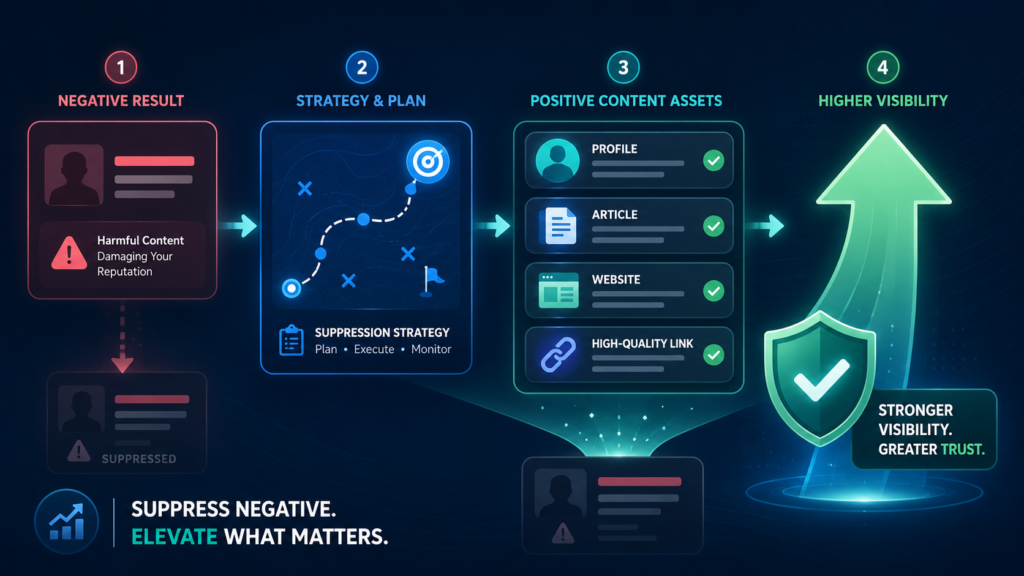
Publishing positive content is only the beginning.
To suppress negative search results, positive assets often need authority. That usually means internal links, external backlinks, profile links, citations, and strategic promotion.
Authority-building may include:
- linking from the official website to important profiles
- linking from bios to interviews
- building backlinks to positive guest posts
- earning mentions from relevant websites
- connecting related profiles
- linking between owned content where natural
- using partner pages or association profiles
- promoting positive media mentions
- improving indexation of positive pages
For example, if a positive interview ranks on page two, link building may help it move to page one. If a LinkedIn profile is close to page one, better completeness and external mentions may help. If a guest post has strong relevance but weak authority, backlinks may support its movement.
The goal is not to build spam. The goal is to help legitimate positive assets earn the authority signals they need to compete.
Create a Content Asset Mix
A good SEO reputation management strategy should not depend on one article or profile.
A stronger campaign usually includes a mix of assets:
- owned website pages
- professional profiles
- third-party guest posts
- interviews
- PR-style publications
- industry directory profiles
- social profiles
- personal or company bios
- case studies
- positive brand mentions
- podcast appearances
- topic-specific articles
This creates more opportunities to occupy branded search results.
For example, a founder may need a personal website, company leadership page, LinkedIn profile, several interviews, guest posts, podcast pages, and professional association profiles.
A business may need an optimized homepage, About page, case studies, business directory profiles, industry articles, press releases, partner mentions, and branded blog content.
The best mix depends on what is currently ranking and what needs to be suppressed.
Improve Entity Consistency
Search engines try to understand entities: people, companies, organizations, products, and brands.
If the information across the web is inconsistent, search engines may have a weaker understanding of the person or brand.
Entity consistency means keeping important details aligned across assets.
For a person, this may include:
- full name
- professional title
- company affiliation
- location where relevant
- official website
- social profiles
- biography
- industry
- expertise areas
For a company, this may include:
- exact company name
- website URL
- logo
- business description
- leadership information
- address or service area where relevant
- phone number if applicable
- social profiles
- industry category
Consistent information can help strengthen branded search signals.
This does not mean every profile must use identical text. It means the core facts should be clear and aligned.
Monitor Branded Search Results
Reputation management is not a one-time task.
Search results change. New articles appear. Old pages move. Profiles gain or lose visibility. Competitors, forums, media sites, and directories may enter the results.
Monitoring helps detect these changes early.
Track:
- top 10 branded results
- top 20 branded results
- positive result positions
- negative result positions
- new pages appearing
- changes in titles or snippets
- related branded queries
- search results for individual names
- search results for company names
- search results for “reviews,” “complaints,” or other concern-based phrases
For high-risk brands or individuals, monitoring should be ongoing.
If a new negative result appears, early action is usually easier than waiting until it reaches the top positions.
Use Local SEO Only When Relevant
Some reputation management SEO strategies include local SEO, reviews, and Google Business Profile optimization. These can matter for local businesses, but they should not distract from the main suppression strategy.
For this type of service, local SEO is relevant only when local search results are part of the reputation issue.
For example, a local business may need:
- accurate Google Business Profile information
- consistent business listings
- stronger location pages
- positive local content
- better branded search results
- review visibility awareness
However, review management is a separate area. Responding to reviews, requesting reviews, and managing customer feedback can help a local brand, but they are not the same as SEO reputation suppression.
If the main issue is a negative article, old media result, complaint page, or forum thread ranking in Google, the campaign should focus on branded SERP control, positive assets, and authority building.
Avoid Fake or Risky Reputation Tactics
Reputation management should be handled carefully.
Avoid tactics such as:
- fake reviews
- fake profiles
- fake media mentions
- spammy backlinks
- duplicate low-quality articles
- misleading claims
- keyword-stuffed content
- mass-produced thin profiles
- attacking competitors or publishers
- hiding important facts with deceptive content
These tactics can damage trust and may create more risk than benefit.
A safer approach is to create legitimate, useful, optimized content that accurately represents the person or brand and gives search engines better results to rank.
SEO reputation management should improve the quality and balance of the search results, not create artificial noise.
Strategies for Individuals and Personal Brands
Individuals often need reputation management when personal search results affect professional opportunities.
This may include:
- founders
- executives
- consultants
- attorneys
- doctors
- creators
- investors
- public figures
- job candidates
- professionals with old online mentions
Useful strategies for individuals include:
- creating or improving a personal website
- optimizing LinkedIn
- publishing professional bios
- creating author profiles
- securing interviews
- publishing guest articles
- appearing on podcasts
- building speaker profiles
- improving company leadership pages
- strengthening positive third-party mentions
For individuals, the goal is usually to build a search result page that reflects current expertise, credibility, achievements, and professional identity.
This is especially important when old content, outdated information, or unrelated results are shaping the search experience.
Strategies for Companies and Brands
Companies often need SEO reputation management when branded searches affect trust, leads, hiring, partnerships, or sales.
Useful strategies for companies include:
- optimizing the homepage and About page
- creating leadership pages
- publishing case studies
- building a press or media page
- improving company profiles
- publishing guest posts
- creating third-party brand features
- promoting positive news
- strengthening partner mentions
- creating helpful branded content
- building links to positive assets
- monitoring branded searches
For businesses, the first page of Google should ideally show a strong mix of owned assets, credible third-party mentions, professional profiles, and neutral or positive information.
If negative content dominates page one, the business may need a broader suppression campaign.
When SEO Reputation Management Strategies Need Professional Support
Some situations are simple. Others are difficult.
Professional support is usually useful when:
- negative results are on page one
- negative content ranks in the top three positions
- the result is from a strong domain
- the issue affects leads, sales, hiring, or credibility
- multiple negative results appear
- there are few positive assets ranking
- the person or brand has limited online presence
- previous attempts have failed
- new content needs to be published on third-party sites
- link building is needed
- confidential handling is important
A professional campaign should start with a clear audit and realistic expectations.
The right question is not only “Can this negative result be removed?” It is also “What positive assets can realistically outrank it?”
Build a Stronger Search Presence Before Negative Results Define It
SEO reputation management strategies are most effective when they are planned around the actual search results.
For brands and individuals, the goal is to build a stronger search presence through owned assets, optimized profiles, credible third-party content, authority building, and ongoing monitoring. When positive and neutral assets become stronger, negative results have less room to dominate page one.
This is not about fake content or quick tricks. It is about creating a better, more accurate, and more credible branded search experience.
If negative, outdated, or misleading content is affecting trust, leads, partnerships, hiring, or professional credibility, a confidential SEO reputation review can help identify which results are most damaging and what suppression strategy is realistic.