

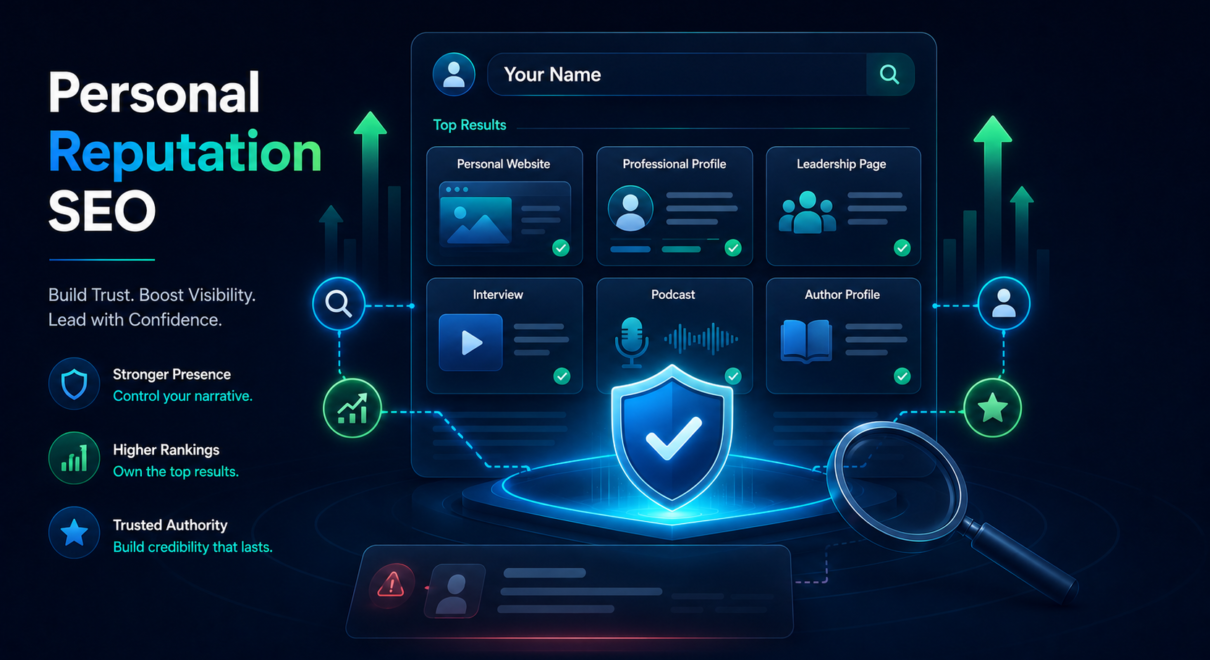
SEO reputation management for individuals is the process of improving what appears in search results when someone searches a person’s name. This can apply to founders, executives, professionals, consultants, public figures, doctors, attorneys, investors, creators, job candidates, and anyone whose personal search results can affect trust or opportunity.
For individuals, search results are often part of the first impression.
A potential client may search your name before scheduling a call. An investor may check a founder before continuing a conversation. A hiring manager may review an executive’s background. A journalist may research a public figure before reaching out. A business partner may look for signals of credibility before signing an agreement.
If the first page of Google shows strong professional assets, the search results can support trust. If it shows outdated articles, old controversies, irrelevant mentions, legal references, forum discussions, or incomplete information, it can create doubt before you have a chance to explain anything.
That is why personal reputation management SEO is important.
The goal is not to create fake content or hide legitimate information with low-quality pages. The goal is to build a stronger, more accurate, and more current search presence around a person’s name.
Why Personal Search Results Matter
For individuals, reputation is not only shaped by resumes, websites, LinkedIn profiles, referrals, or word of mouth. It is also shaped by search results.
When someone searches a personal name, Google may show:
- LinkedIn profiles
- company leadership pages
- old articles
- interviews
- podcast appearances
- business profiles
- social media profiles
- public records
- news mentions
- forum discussions
- author pages
- unrelated people with similar names
- outdated company affiliations
- negative or incomplete third-party pages
This mix can be helpful or damaging.
If the search results show current professional profiles, interviews, company pages, and useful third-party mentions, the person appears more credible. If the results show outdated content, negative pages, or confusing information, the search experience becomes weaker.
Personal search results are especially important for people whose name is directly connected to business decisions.
This includes founders, executives, consultants, medical professionals, attorneys, financial professionals, real estate professionals, creators, public figures, and anyone in a trust-based role.
What Is SEO Reputation Management for Individuals?
SEO reputation management for individuals focuses on improving personal-name search results by promoting positive, neutral, and professional assets.
This may include:
- personal websites
- professional bio pages
- LinkedIn profiles
- company leadership pages
- interviews
- podcast appearances
- guest articles
- author profiles
- speaker pages
- association profiles
- portfolio pages
- media mentions
- founder stories
- thought leadership content
- third-party professional profiles
The purpose is to create a stronger personal search presence.
If negative or outdated content ranks highly, the strategy may focus on suppression. Suppression means helping stronger positive or neutral pages rank above unwanted results so the negative content becomes less visible.
This is different from removal.
Removal means the content is deleted or deindexed. Suppression means the content still exists, but it is pushed lower by better-ranking assets.
In many personal reputation cases, suppression is more realistic than removal.
Who Needs Personal Reputation Management SEO?
Personal reputation management SEO can be useful for many types of people.
It is especially relevant for:
- founders
- executives
- entrepreneurs
- doctors
- attorneys
- consultants
- finance professionals
- real estate professionals
- creators
- public figures
- speakers
- investors
- board members
- job candidates
- authors
- agency owners
- professionals affected by old mentions
The need is usually strongest when search results affect credibility.
For example, a founder may need stronger search results before fundraising. An executive may need a cleaner search presence before a new role. A doctor or attorney may need current professional assets to appear above outdated third-party pages. A consultant may need interviews, articles, and profiles to support trust.
The common issue is simple: people are searching the name, and the search results are not creating the right impression.
Founder Reputation Management
Founder reputation management is important because a founder’s personal name is often connected to the company’s credibility.
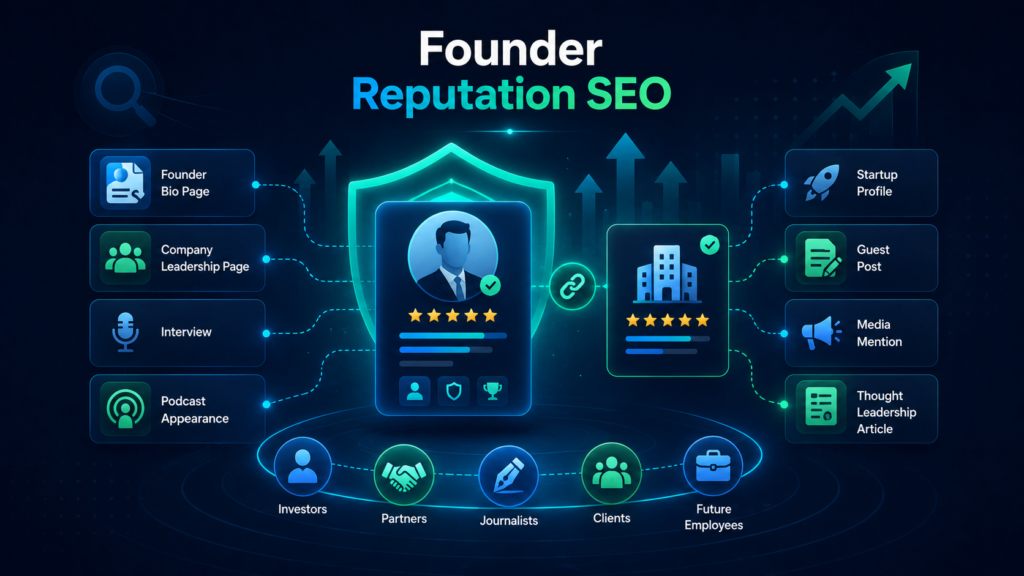
Investors, partners, journalists, clients, and future employees may search the founder before they search the company in detail. If the founder’s search results are weak, outdated, or negative, that can affect how the business is perceived.
Founder reputation management may focus on:
- founder bio pages
- company leadership pages
- interviews
- founder story articles
- podcast appearances
- LinkedIn optimization
- guest posts
- startup profiles
- industry commentary
- media mentions
- thought leadership content
- personal website optimization
For founders, the goal is usually to connect the person with current work, expertise, company mission, achievements, and relevant industry context.
If outdated company associations or old articles rank for the founder’s name, new positive and neutral assets may be needed to rebalance the search results.
A founder does not need to become a celebrity for this to work. The goal is simply to make the search results clearer, more current, and more professionally useful.
Executive Reputation Management SEO
Executive reputation management SEO focuses on improving search results for senior leaders, executives, board members, and public-facing professionals.
Executives are often searched by:
- employers
- investors
- journalists
- partners
- clients
- employees
- competitors
- conference organizers
- recruiters
- industry contacts
For executives, search results should ideally show credibility, experience, leadership, and professional relevance.
Useful assets may include:
- executive bio pages
- company leadership pages
- LinkedIn profiles
- media interviews
- speaker profiles
- contributed articles
- podcast appearances
- industry profiles
- association pages
- author pages
- conference pages
Executive reputation management SEO is especially useful when the first page of Google is incomplete, outdated, or dominated by third-party pages that do not reflect the person’s current role.
For example, an executive may have an old company profile ranking above their current leadership page. A past article may be more visible than current accomplishments. A similar-name result may create confusion. A weak LinkedIn profile may rank, but not present enough credibility.
The strategy should help search engines and users understand who the executive is today.
Personal Brand Search Results
Personal brand search results are the pages that appear when someone searches your name.
For many individuals, these results are underdeveloped. There may be one LinkedIn profile, one old article, a few social profiles, and several unrelated results. This creates a weak personal search presence.
A stronger personal brand search result page may include:
- personal website
- current LinkedIn profile
- company leadership page
- professional bio
- interview
- podcast appearance
- guest article
- industry profile
- author page
- speaker profile
- relevant social profile
The goal is to create a balanced search result page that makes sense.
If the person is a founder, the results should connect them to their company and industry. If the person is a consultant, the results should show expertise and services. If the person is a public figure, the results should support credibility and current activity. If the person is a professional, the results should confirm background and trust.
Personal brand search results are not only about ranking one website. They are about shaping the full page.
Common Personal Reputation Problems in Search
Individuals may need reputation management SEO for different reasons.
Common issues include:
- outdated articles ranking highly
- old company profiles appearing above current work
- negative media mentions
- public records or legal references
- unrelated people with the same name
- weak or incomplete professional profiles
- old social profiles
- forum discussions
- negative third-party pages
- lack of positive content
- no personal website
- missing or outdated LinkedIn profile
- lack of current interviews or media mentions
- poor control over page-one search results
Some of these issues are not directly negative, but they still create a weak search experience.
For example, if a founder has no strong personal search presence, one old article can dominate. If an executive has only a LinkedIn profile and several unrelated results, there is not enough positive content competing. If a professional has outdated profiles, people may question whether the information is current.
Reputation management is not always about crisis. Sometimes it is about building a stronger foundation before a problem becomes more visible.
Start With a Personal SERP Audit
A personal SERP audit is the first step.
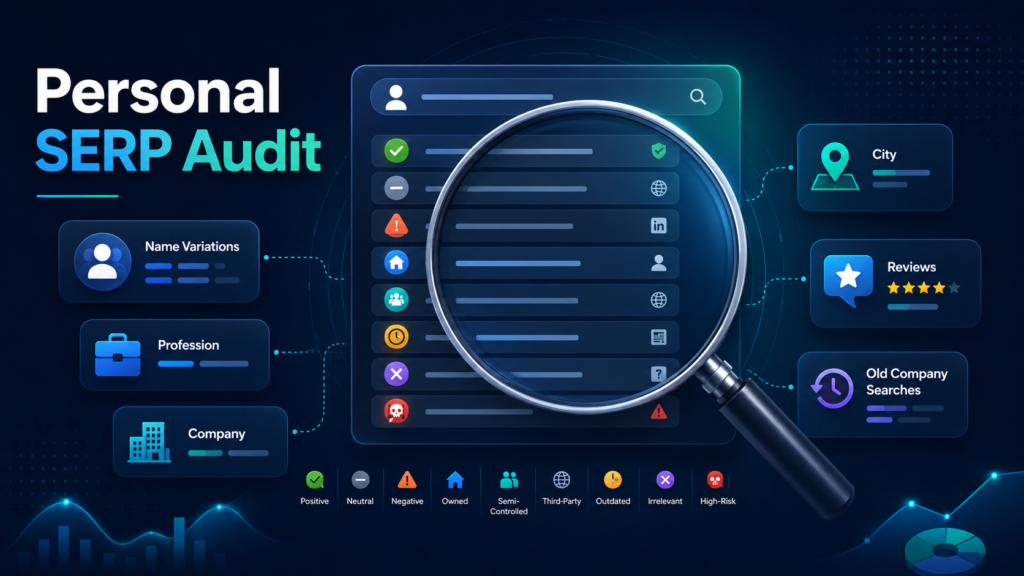
SERP means search engine results page. For an individual, the audit reviews what appears when someone searches the person’s name and related variations.
Searches may include:
- full name
- full name plus company
- full name plus city
- full name plus profession
- full name plus “reviews” if relevant
- full name plus old company
- founder name plus company
- executive name plus brand
- common name variations
Each result should be classified as:
- positive
- neutral
- negative
- owned
- semi-controlled
- third-party
- outdated
- irrelevant
- high-risk
- easy to improve
- difficult to suppress
This audit helps determine what should be promoted, improved, created, or monitored.
A personal SERP audit may reveal that a LinkedIn profile is close to the top but incomplete. It may show that a company bio is not optimized. It may show that an interview is on page two and could be strengthened. It may also show that a negative or outdated result is stronger than expected.
Without this audit, the campaign becomes guesswork.
Strengthen Owned Personal Assets
Owned assets are pages the individual controls directly or through their company.
These may include:
- personal website
- personal About page
- professional bio
- portfolio page
- media page
- author page
- speaking page
- company leadership profile
- founder page
- project pages
- press page
For an individual, owned assets should clearly explain:
- who the person is
- current role
- company or professional affiliation
- areas of expertise
- current work
- credentials or experience
- media or speaking activity
- notable projects
- official contact or profile links
If a personal website exists, it should be optimized for the person’s name. If a company leadership page exists, it should be detailed enough to rank and provide useful information. If the person has a media or speaker page, it should be clear, current, and internally linked.
Owned assets are important because they establish the official source of information.
Optimize LinkedIn and Professional Profiles
LinkedIn is often one of the strongest assets for personal-name searches.
A strong LinkedIn profile can help occupy valuable search space, especially for professionals, founders, executives, consultants, and public figures.
A LinkedIn profile should include:
- consistent full name
- current title
- current company
- professional summary
- accurate experience
- relevant skills
- profile photo
- company links
- industry keywords used naturally
- featured content where appropriate
- current activity if relevant
Other professional profiles can also help.
Depending on the industry, useful profiles may include:
- Crunchbase
- speaker profiles
- author pages
- professional associations
- medical directories
- legal directories
- real estate profiles
- finance industry profiles
- conference pages
- podcast guest pages
- university or alumni profiles
- portfolio platforms
The key is consistency. If profiles show different titles, old companies, or incomplete descriptions, they can weaken the overall search presence.
Publish Interviews and Thought Leadership Content
Interviews and thought leadership content are useful because they create credible third-party assets.
For individuals, these assets can show expertise, experience, current perspective, and professional relevance.
Useful formats include:
- founder interviews
- executive interviews
- podcast appearances
- expert commentary
- guest articles
- industry opinion pieces
- Q&A articles
- professional profiles
- speaker features
- media mentions
The content should be relevant to the person’s real work and industry.
For example, a founder may publish interviews about business growth, market trends, or company development. An executive may publish leadership commentary or industry analysis. A consultant may write educational articles based on their expertise. A doctor or attorney may contribute professional insights within appropriate guidelines.
These assets can help push positive or neutral results higher, especially when published on credible platforms.
Use Guest Posts and Author Pages Carefully
Guest posts can support personal reputation management SEO when they are relevant, high-quality, and connected to the person’s expertise.
A guest post may help because it creates a third-party page associated with the person’s name. The author bio can also become a useful asset.
However, guest posts should not be thin or generic.
A useful guest post should:
- match the person’s expertise
- be published on a relevant site
- include a natural author bio
- include a clear name mention
- avoid over-promotion
- provide real value
- be indexable
- have a strong title and structure
For founders and executives, guest posts can help establish thought leadership. For professionals, they can support trust and authority. For public figures, they can help create a more complete search presence.
The goal is not simply to publish content. The goal is to create content that deserves to rank for the person’s name or professional context.
Create a Balanced Personal Content Footprint
A strong personal reputation strategy usually includes multiple asset types.
For example, a founder may need:
- company leadership page
- LinkedIn profile
- founder interview
- personal website
- guest article
- podcast appearance
- Crunchbase profile
- media mention
An executive may need:
- company bio
- LinkedIn profile
- speaker page
- interview
- thought leadership article
- conference profile
- author page
A consultant or professional may need:
- personal website
- service bio
- LinkedIn profile
- guest posts
- professional directories
- case examples
- podcast or interview pages
The right mix depends on the current search results.
A personal search result page should not rely on only one asset. A wider content footprint gives Google more positive or neutral results to rank.
Suppressing Outdated or Negative Personal Results
If unwanted results rank for a personal name, suppression may be needed.
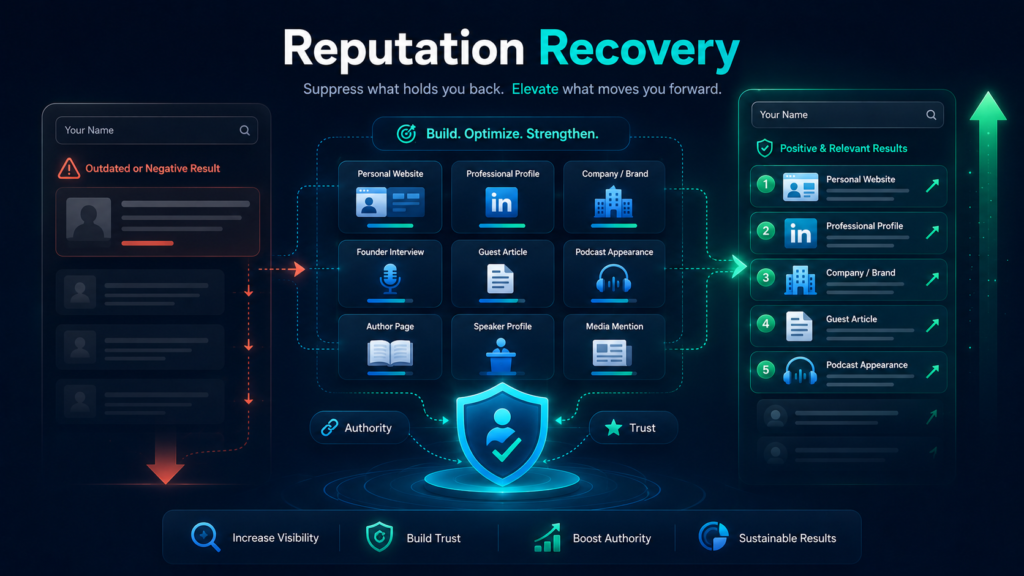
Suppression means promoting stronger positive or neutral assets so the negative result moves lower.
This may involve:
- improving owned pages
- optimizing LinkedIn
- creating professional profiles
- publishing interviews
- publishing guest posts
- building links to positive assets
- creating personal brand content
- strengthening company leadership pages
- earning third-party mentions
- monitoring search result movement
The difficulty depends on the strength of the negative result.
An old low-authority blog post may be easier to suppress. A major media article or public database page may be more difficult. A result in position 9 may be easier to move than one in position 2.
Suppression is rarely instant. It requires content, optimization, authority signals, and time.
What SEO Reputation Management Cannot Do for Individuals
SEO reputation management can improve search results, but it cannot control everything.
It cannot guarantee that:
- every negative result will disappear
- Google will remove third-party content
- all outdated pages can be deleted
- a strong news article will be easy to outrank
- one profile will solve the issue
- results will change immediately
- new negative content will never appear
This is important for expectations.
Ethical reputation management does not promise impossible removals. It focuses on realistic improvement through search analysis, content creation, optimization, authority building, and monitoring.
In some cases, removal may be possible through legal, platform, or publisher channels. But when removal is not realistic, suppression is often the practical path.
How Long Personal Reputation Management SEO Takes
Timelines vary.
A simple case may show movement within a few months. A more difficult case may take longer, especially if negative content is ranking on a strong domain.
Timeline depends on:
- strength of negative result
- current position of unwanted content
- existing positive assets
- uniqueness of the person’s name
- competition in search results
- number of new assets needed
- quality of publishing platforms
- backlinks and authority signals
- indexing speed
- search result volatility
If the person already has several positive assets close to page one, movement may be faster. If the person has almost no online presence and a strong negative result ranks highly, the process may take more time.
The best approach is to start with a personal SERP audit and build expectations from the actual search results.
When Individuals Need Professional Help
Some personal reputation issues can be improved with basic profile updates and content creation. Others require a more structured campaign.
Professional support may be useful when:
- negative results appear on page one
- outdated articles dominate personal search results
- the issue affects clients, hiring, investors, or partnerships
- a founder’s reputation affects the company
- an executive has high public visibility
- current professional assets are weak
- similar-name results create confusion
- old content is stronger than current information
- multiple assets need to be created and promoted
- confidential handling is important
A professional campaign should start with a clear audit, not promises.
The main question is: which positive assets can realistically rank, and what is needed to help them compete?
Build Search Results That Reflect Your Current Reputation
For individuals, search results can influence trust before any direct conversation happens.
A founder, executive, consultant, doctor, attorney, public figure, or professional may already have strong real-world credibility. But if the first page of Google does not reflect that credibility, opportunities can be affected.
Personal reputation management SEO helps build a stronger search presence through owned pages, optimized profiles, interviews, guest posts, professional bios, thought leadership content, third-party mentions, and authority building.
The goal is not to create a false image. The goal is to make search results more accurate, current, and professionally useful.
If old, negative, incomplete, or outdated results are shaping the first impression, a confidential SEO reputation management for individuals review can help identify what currently ranks, which positive assets can be promoted, and what suppression strategy is realistic.